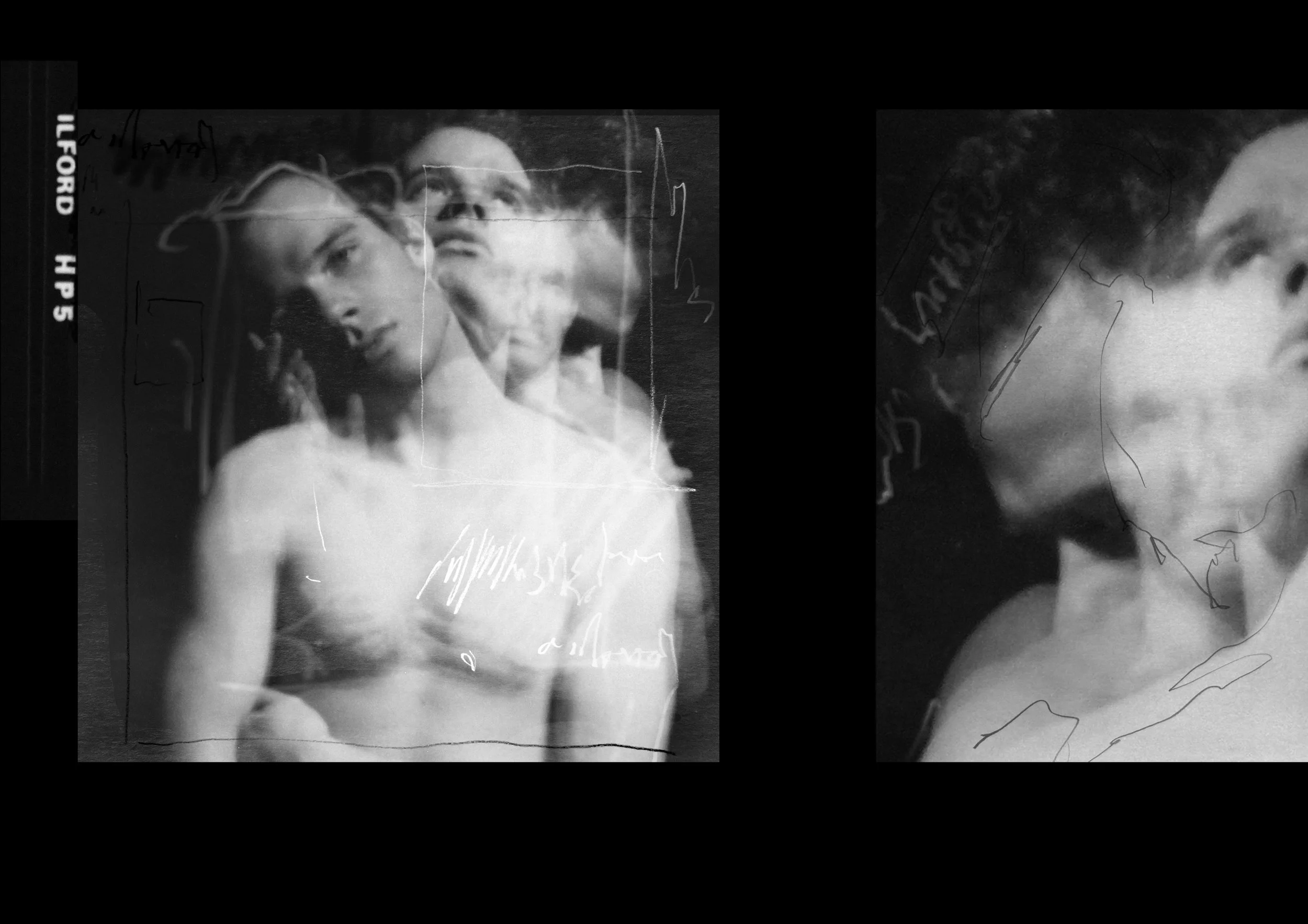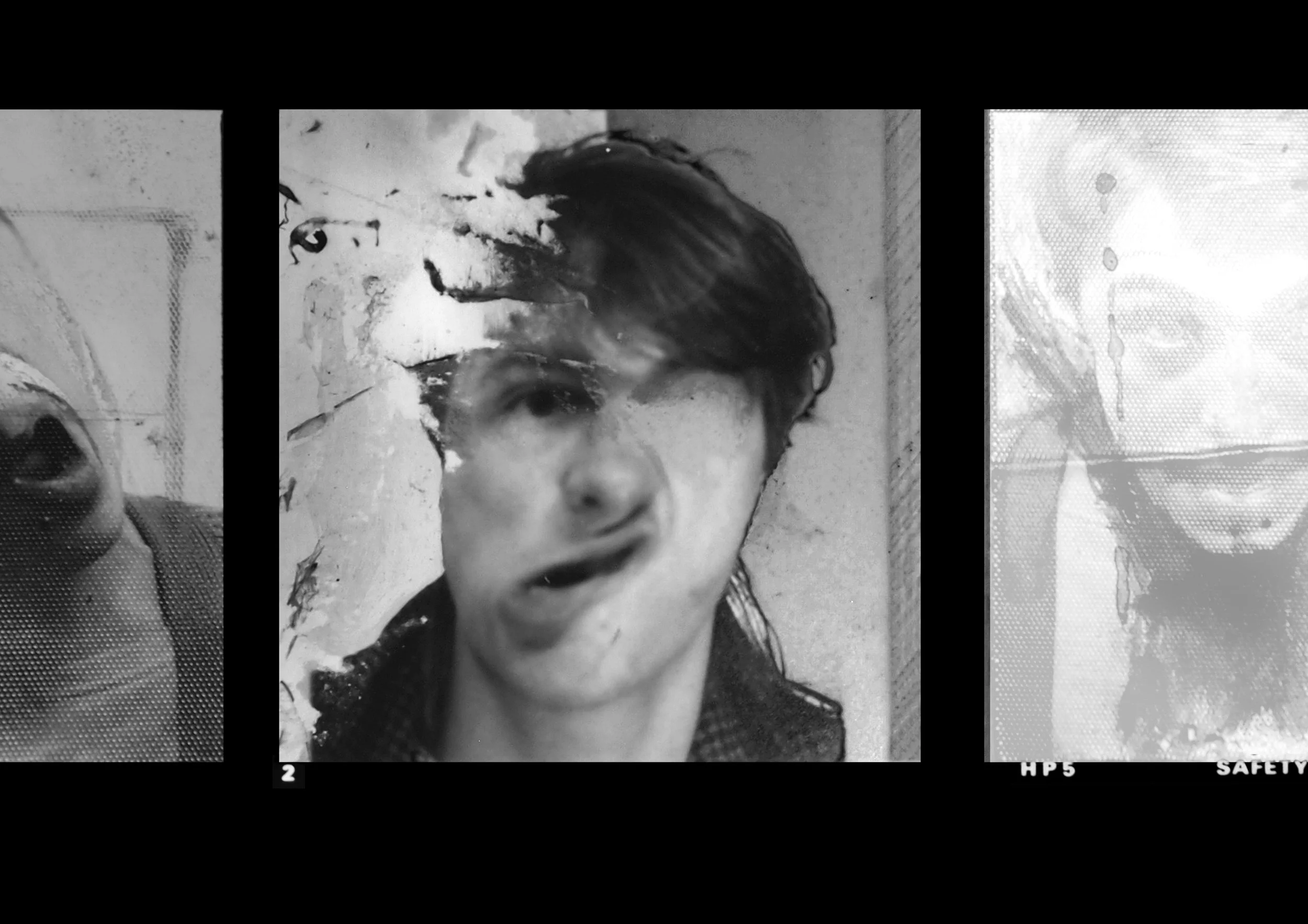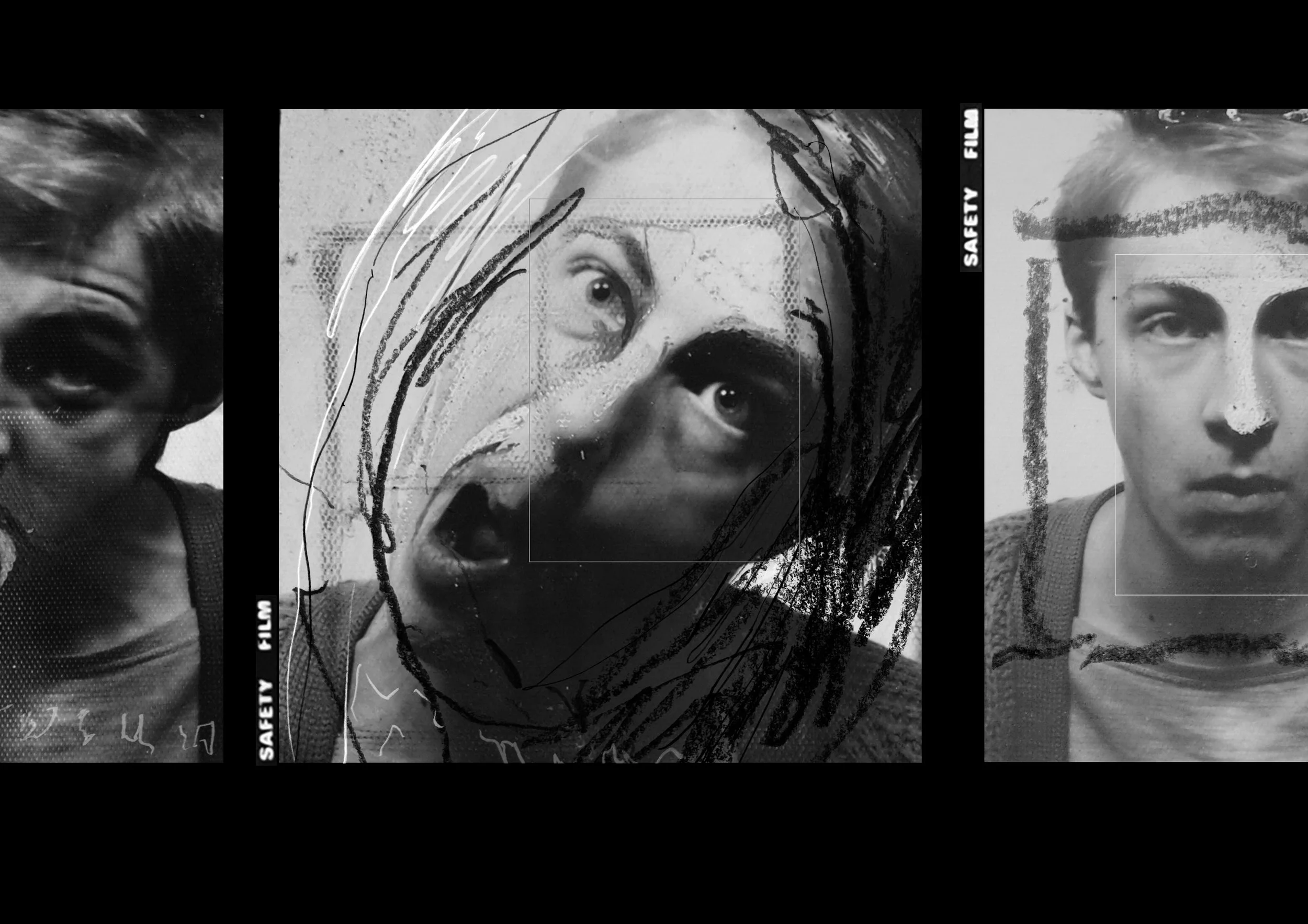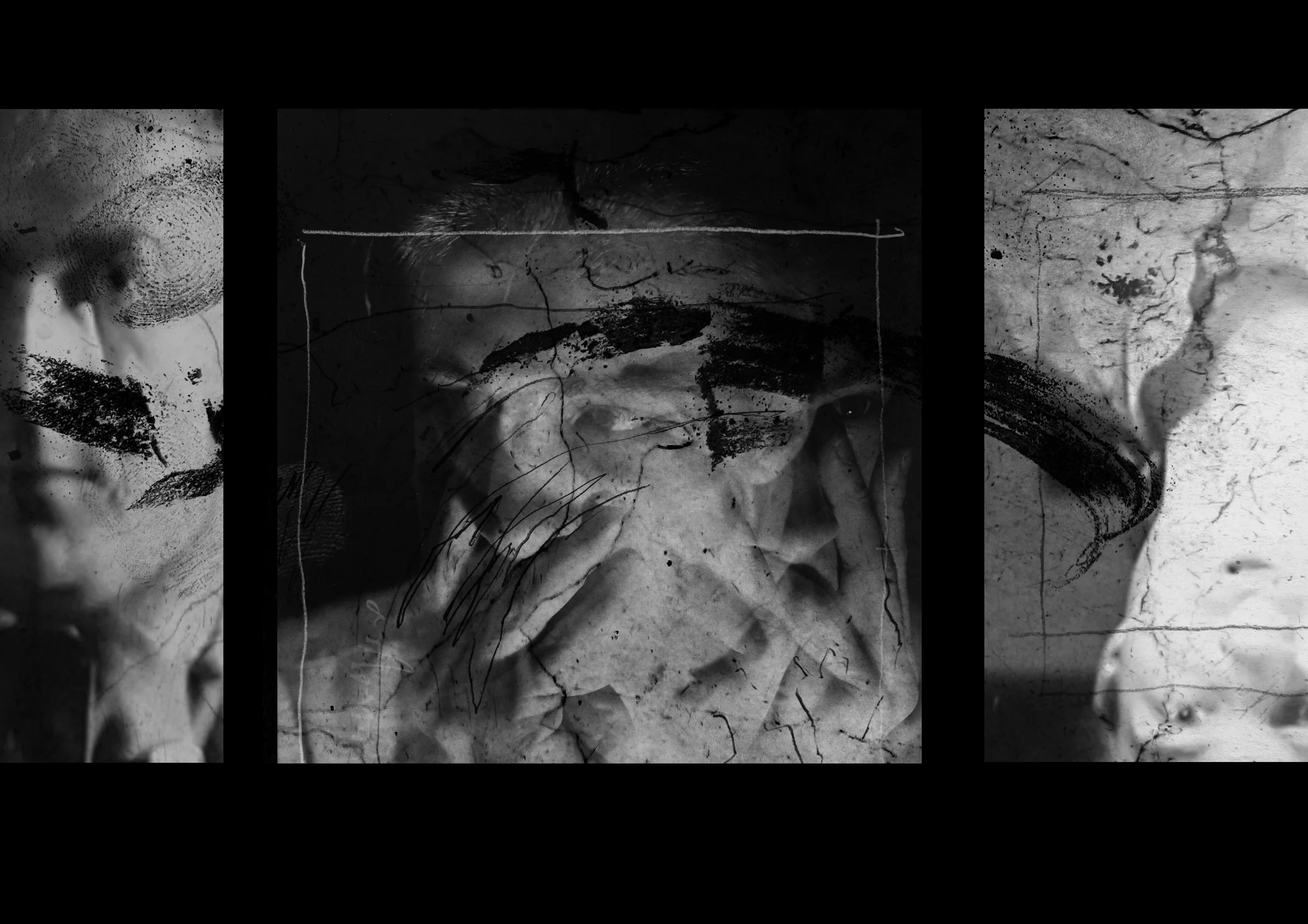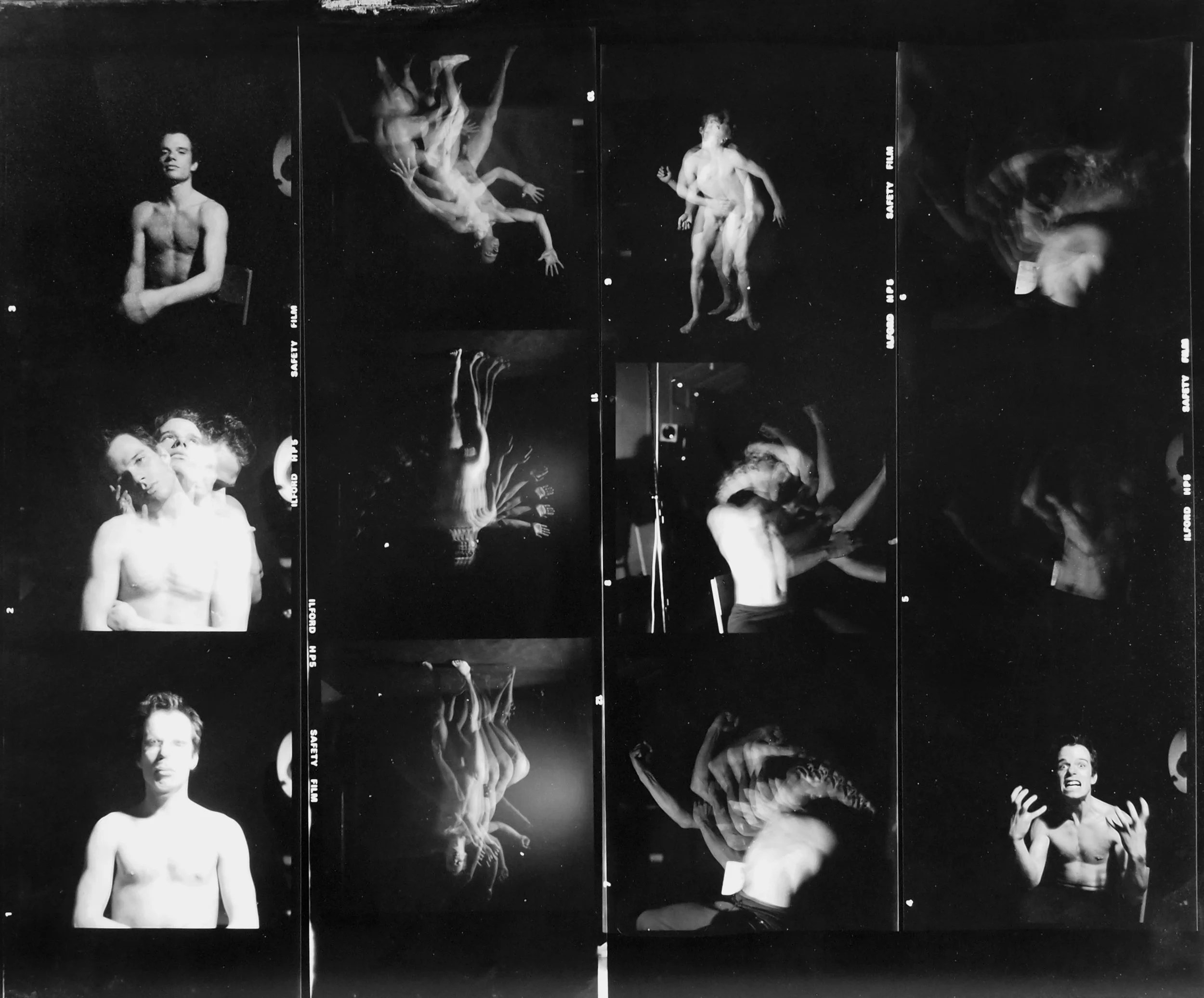
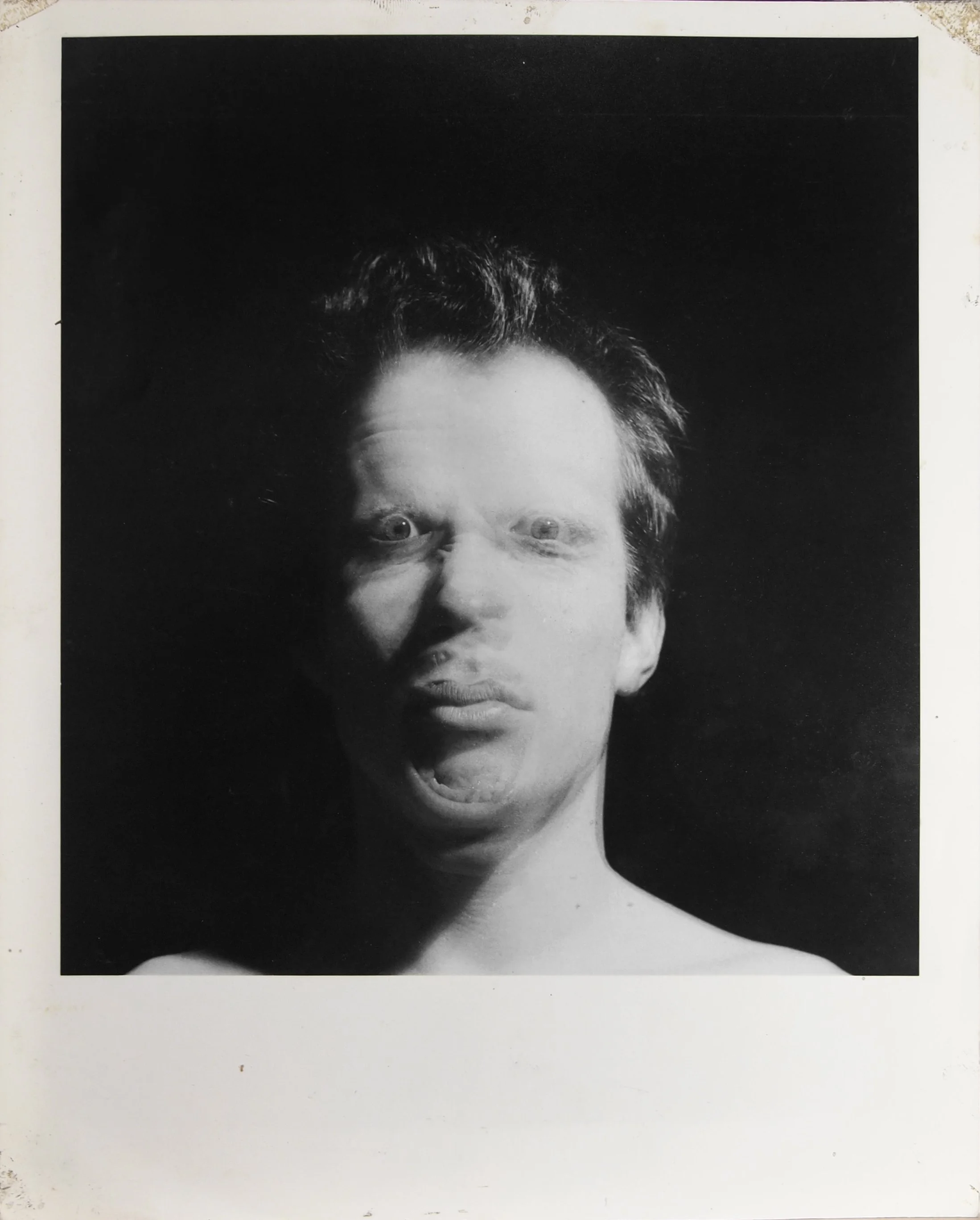
When these contact sheets were made in around 1982 the photographs of Eadweard Muybridge were of interest for being almost a hundred years old. His was a very scientific approach to the study of locomotion in animals but while I found his images exciting for their energy, their contrivance and their measured performance his concerns were not my own. I was interested much more in the image itself - beyond their texture and their archaic nature, how each exposure interacted with the one before to create a narrative which might be very unscientific.
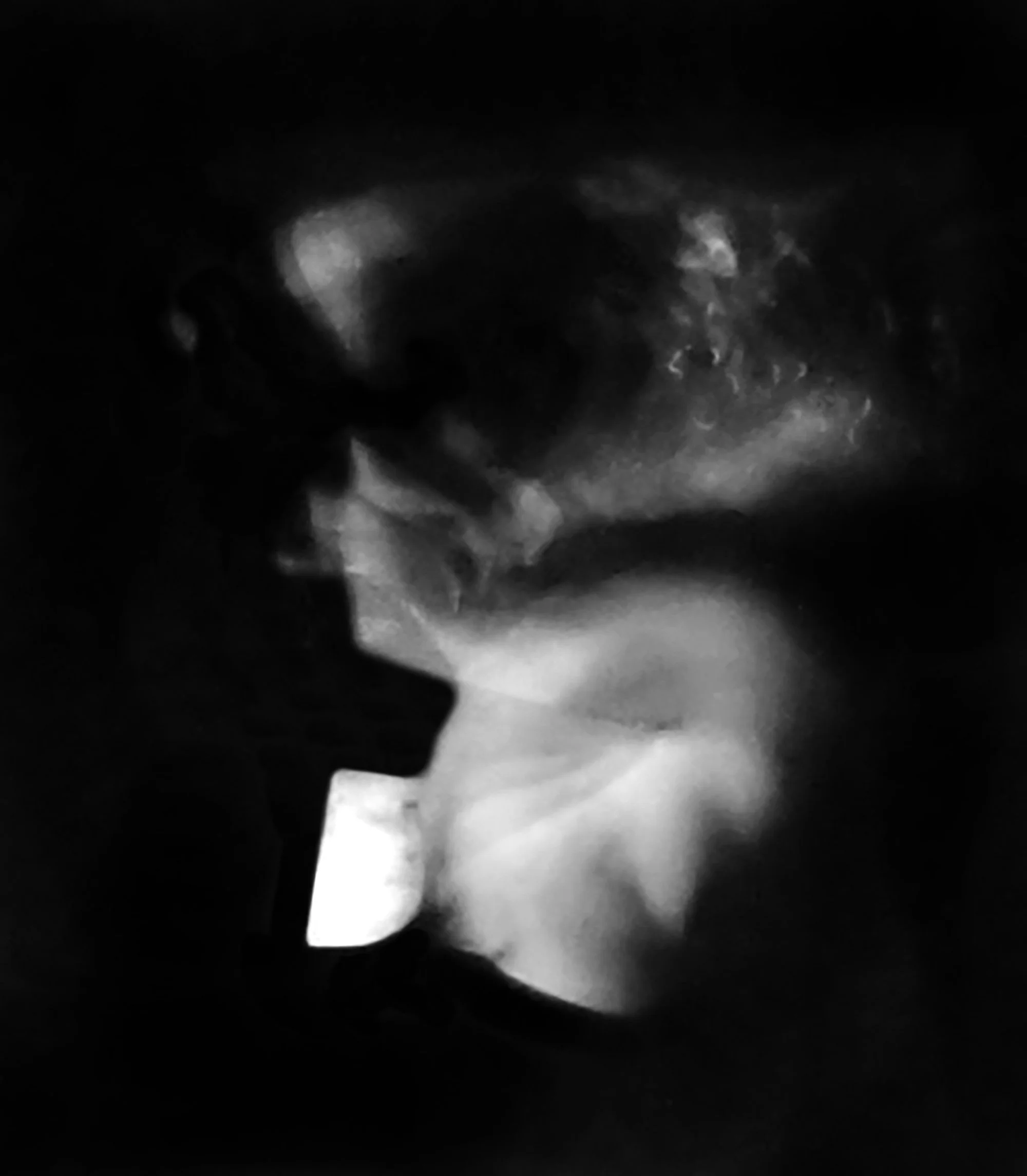
There was measurement and calculation involved of course, exposure times had to be controlled so as not to burn the details out and the sequences were very much staged but the action involved served no particular purpose. Just a shot in the dark. As frames were added to the image they complicated and redrew the figure, with some elements combining and others falling away and as the layers built up new forms emerged which now seem to be the constants or the enduring deposit of the event being photographed. On one level these deposits might be quite abstract physical forms, a kind of life-drawing beyond the pose, but on another level they suggested narratives or some kind of presence which carried a much more emotive weight. I have only three contact sheets and a handful of enlargements from this body of work and none of the negatives, which is unfortunate since I know there were more, but interesting since it provides an opportunity.
I am not there anymore and the people in the images can hardly be the same having changed every cell in their bodies many times over, even the room in which the films were shot will have changed - if it exists at all. So these are lost moments. They exist only as a chemical change on light-sensitive paper and in my memory which I cannot be sure is entirely accurate. The same can be said of the images by Muybridge of a galloping horse – that particular thundering beast is no longer present and the moment that all four of its hooves leave the ground can be seen but not experienced. What remains is a cipher that can only point towards similar moments that might be recalled as evidence of an experience. Now, more than forty years later, these images rest at the threshold of a past which cannot be accessed and a future which has yet to happen exactly like the figures themselves in the moment they were photographed. Their poses, expressions and gestures refer to ideas or conversations that we had at the time but can no longer be found. What the figures were thinking can also not be known but they were certainly thinking something.
The room was dark, the curtains were drawn to keep out the bright sunlight of early summer, I think. I remember the room very well – low-ceilinged top-floor with a swirling purple carpet and a coal-fire grate – but what we talked about, what each of us thought I don’t know. I must have thought about the task in hand, the future of these images, my grand and successful future, but the sitters? What does one think about in that awkward, absent space of still performance, being watched by another person with a critical eye? The answer can only be So Many Things: the day, the night to come, the sounds in the street, love and history and the squeaking of the cassette tape. We are all these things every moment of our lives : the dog that barks, the heat of the day, thoughts of friends and the presence of strangers. I thought then and think still that Now cannot be separated from the moment before or the moment after and that for each of us the present moment is haunted by the presence of all our other moments.
The model was a friend of mine, Eric Rainey, someone with whom I lost contact many years ago
-
![]()
Inhabited ER 05
-
![]()
Inhabited PS 04
-
![]()
Inhabited PS 06
-
![]()
Inhabited PS 08